
Under pressure
Tyre pressure is vital when travelling, so is portability… check out the options and the pitfalls.
12/22/20253 min read
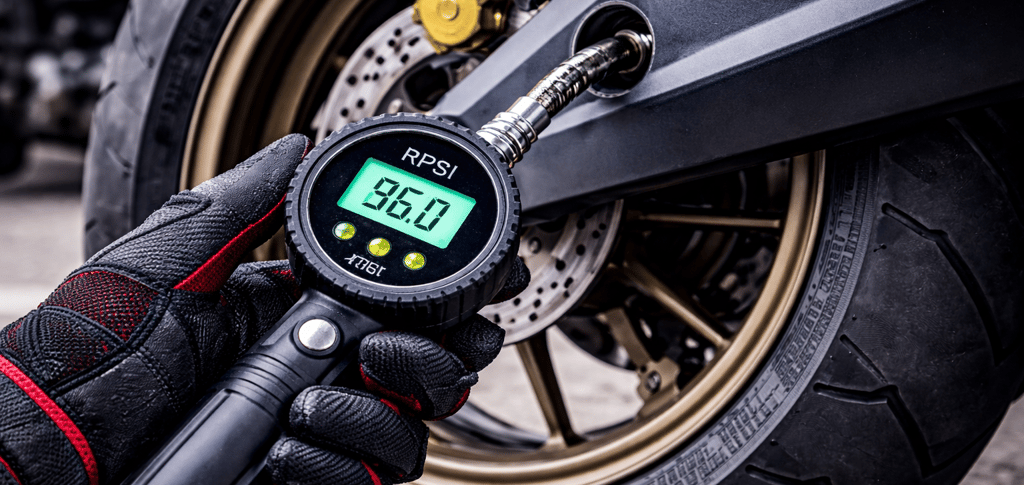
The Essential Guide to Motorcycle Tyre Pressures & Touring with a Cordless Pump
Whether you’re carving through alpine passes, taking on a weekend road trip, or embarking on a cross-continental adventure, one silent factor determines how smooth, safe, and enjoyable your ride will be: tyre pressure.
It’s one of the simplest maintenance tasks yet also one of the most commonly overlooked—especially on long tours where temperature changes, varying loads, and unfamiliar roads all play a part. Add in the rise of portable cordless motorcycle pumps, and touring has become significantly more self-reliant and stress-free.
This guide breaks down why tyre pressure matters, how to manage it while touring, and why a cordless pump deserves a spot in your pannier.
Why Correct Tyre Pressure Matters
Handling & Stability
Tyres are your only contact with the road. Over-inflated tyres create a smaller contact patch, reducing grip and making the bike feel twitchy. Under-inflation increases flex, making cornering sluggish and unpredictable.
Correct pressure ensures:
predictable steering
stable braking
smoother cornering
optimal traction in wet and dry
Tyre Wear & Longevity
Improper pressure literally grinds your tyres away.
Over-inflated = centre wear
Under-inflated = shoulder wear + overheating
Maintaining the recommended PSI can extend tyre life significantly—useful when touring where replacements may be expensive or unavailable.
Fuel Efficiency
Under-inflated tyres increase rolling resistance, meaning your engine works harder. That equals higher fuel consumption—a costly trade-off on long rides where every litre counts.
Safety
Under-inflation also increases heat build-up at speed. On long motorway stretches especially, this can lead to structural failure. It’s rare—but avoidable.
How Tyre Pressure Changes on Tour
Touring isn’t like Sunday riding. You’re constantly changing environments and loads:
Temperature
Tyre pressure rises and falls with ambient temperatures.
Morning cold? PSI drops. Hot motorway stint? PSI rises.
Altitude
High mountain passes = reduced ambient pressure.
Usually minor, but noticeable if you start at sea level and climb to 2,000m+.
Load
Add:
panniers
pillion
camping gear
tools
…and suddenly your rear tyre needs more pressure than normal.
Most manufacturers list two pressure settings:
Solo
Two-up / luggage
Knowing both before you set off is crucial.
The Touring Game-Changer: The Cordless Pump
A decade ago, tyre pressure management meant:
garage forecourts
bulky wired compressors
CO₂ cartridges (single-use, inconsistent)
Now?
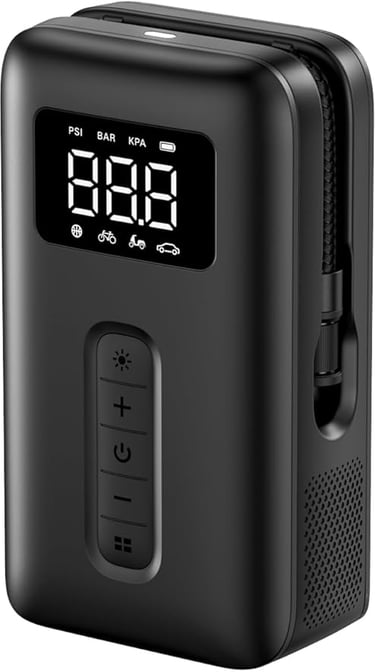
Cordless pumps have revolutionised touring self-sufficiency.
Why carry one?
1. Mid-Tour Adjustments Made Easy
Got a twisty mountain road ahead?
Drop a couple PSI.
Hitting a long motorway stretch afterwards?
Pump back up.
It gives you control—no dependence on garages.
2. Compact & Portable
Modern pumps:
fit in a tank bag
weigh under 1kg
run on rechargeable batteries
often double as a torch / power bank
Perfect for lightweight touring.
3. Peace of Mind for Emergencies
A slow puncture on tour is stressful.
With a pump, you can:
reinflate
limp to a shop
or combine with a tyre plug kit
It turns a potential breakdown into an inconvenience—not a holiday-ending disaster.
How to Use a Cordless Pump Effectively
1. Know your bike’s correct pressures
Check:
owner’s manual
tyre sidewall (max ratings)
manufacturer websites
Typical road touring pressures (examples):
Front: 32–36 PSI
Rear: 36–42 PSI
But never guess. Bike + tyre model matter.
2. Check pressure when tyres are cold
Morning or after long stop.
3. Adjust for load
More luggage = more PSI in the rear.
4. Recheck after long motorway stints
Heat can elevate PSI temporarily—avoid bleeding too much off.
5. Charge the pump before travel
Most offer several inflations per charge.
Bonus tip:
Carry a USB cable to recharge from the bike or a power bank.
Cordless Pump vs CO₂ Cartridges
FeatureCordless PumpCO₂ CartridgesReusable✔✘PSI control✔ Precise✘ RoughEmergency use✔ Unlimited✘ Very limitedSizeSlightly largerVery compactCost long termLowHigh
For touring? Cordless wins.
For ultralight trail or enduro? Cartridges may still appeal.
My Recommended Touring Setup
For long-distance riders:
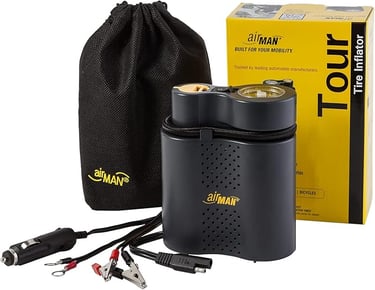
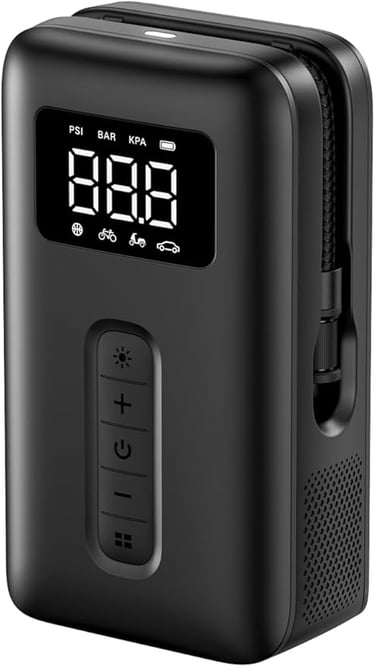
Cordless pump
Digital tyre pressure gauge
Plug/repair kit
Compact tools
Small gloves/towel
That combination handles 90% of tyre issues you’ll face on tour.
Final Thoughts
The more independent you are on the road, the more confident and enjoyable your touring experience becomes.
Tyre pressure isn’t glamorous—but it has a profound effect on:
comfort
safety
fuel
tyre lifespan
bike performance
And with a cordless pump, monitoring and adjusting pressure becomes effortless—no queues at petrol station forecourts, no stress in remote regions, and full control over your ride.
So next time you pack your panniers, don’t just think about tents and tools—give tyre pressure the respect it deserves. Your bike, your wallet, and your ride quality will all thank you for it.
© 2025. All rights reserved.